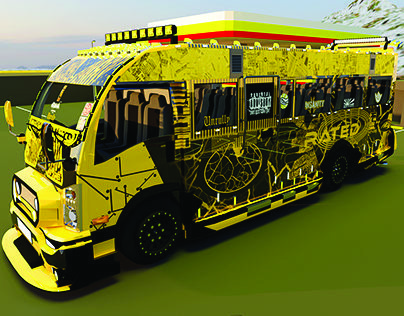
Kenya Matatu Culture is an urban subculture centered around buses, vans, music, and graffiti. It is believed to have originated from the eastern side of Nairobi, popularly known as Eastlandoh. Over the years, it has evolved from being seen as a rebellion tactic by the youth to a tourist attraction and an employment venture.
Manyanga, Jav, or Nganya are some of the terms used to describe these flashy buses and vans. The exterior is usually themed after movies, sports clubs (with football being the most popular theme), and musicians. In recent years, contemporary art-themed matatus have been on the rise.
The interior of these matatus is often fitted with a powerful audio-visual system, including multiple TV screens, woofers, and disco lights. These elements come together to create a mobile entertainment experience that is uniquely Kenyan.
HISTORY OF GRAPHICS ON KENYAN BUSES
The Rise of Matatu Art
The history and formation of graphics on Kenyan buses, particularly the iconic matatus, is a fascinating aspect of the country's transport culture. Matatus, which are privately owned mini-buses, serve as a primary means of public transport in urban areas, especially in Nairobi.
The use of graphics on matatus began in the late 1990s and early 2000s, when these vehicles transitioned from simple transport modes to mobile art forms. Initially, matatus were painted in plain colors with minimal decoration. However, as competition among matatu owners increased, operators began to design their vehicles to attract more passengers. This led to the rise of vibrant graphics, including intricate murals, bold colors, and catchy slogans.