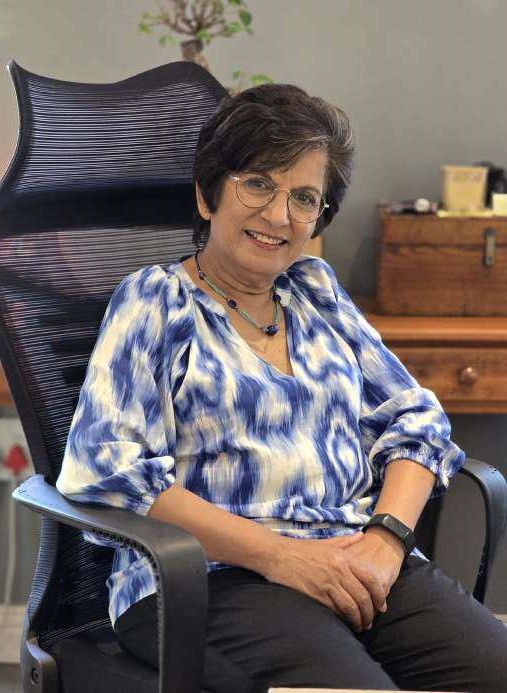
Picture this: At 28, Banice Mbuki Mburu ascended to the position of Board Director at Kimisitu Sacco, a formidable player in the world of savings and credit cooperatives. While serving in this capacity, fellow directors appointed her to serve in the Kimisitu Foundation, extending her expertise in non-profit organizations, especially working with young people.
Mbuki’s story takes on an even more compelling narrative. In the relentless pursuit of her passion, she now holds the mantle of Global Member Engagement and Partnership Officer at “Girls Not Brides: The Global Partnership to End Child Marriage”. In this role, she champions the cause across Africa, Asia, Latin America & the Caribbean.
Q&A with Banice Mbuki Mburu
Q: How did your journey at Kimisitu start?
A: I joined Kimisitu Sacco as a member at 21, earning a salary of 24,000/ per month. At that time, Kimisitu was affiliated with NGOs. I was working as an intern for a particular NGO, and my manager—my former lecturer at USIU Africa—challenged me to start saving. He was so profound that he even mentioned he wouldn’t pay my salary unless I presented him with a savings plan.
In response to his challenge, I joined Kimisitu Sacco and, remarkably, managed to save over a million shillings within three years of becoming a member.
Q: With your impressive two-year tenure as a director at Kimisitu Sacco, what achievement are you most proud of in enhancing financial services and member satisfaction?
A: I’ve had the privilege of serving on the Business Development Committee, responsible for enhancing member experience at Kimisitu Sacco.
When I first stepped into this role, onboarding new members was one of the challenges we faced. I took the initiative to merge ICT and customer services, streamlining the onboarding process significantly. As a result of this initiative, a new member applying to join the Sacco can do so by the click of a button, and it only takes us a day to conduct a background check and onboard a member.
Member education has been restructured to target specific member financial needs and address current financial investment trends in the market.
In addition, I played a pivotal role in developing the Sacco's progressive 2024-2028 Strategic Plan. We deliberately engaged with young people in financial literacy. Our partnerships with institutions of higher learning are geared towards spreading financial literacy among the youth.
Additionally, while serving as the Hon. Secretary and a member of the Finance and Administration Committee, I championed strategic decisions like the establishment of an internal legal office. This move significantly reduced the costs associated with legal consultation within the Sacco.
Achievements Highlight:
- Merging ICT and customer services for streamlined onboarding.
- Developing the 2024-2028 Strategic Plan with a focus on financial literacy for youth.
- Establishing an internal legal office to cut costs.
- Championing product redesign to meet member needs.
- Decentralizing services through the Kimisitu Mashinani Initiative.
- Increasing digital channels to enhance service delivery.
It’s crucial to note that these achievements were not accomplished in isolation. The board functions as a cohesive unit, working together towards common goals.
I’m proud to say that many young people, including my friends and peers, have joined the Sacco during my term. Our staff predominantly consists of young individuals, many of whom belong to the millennial and Gen Z generations.
As a director at Kimisitu Sacco, I have also championed:
- Re-designing products that are responsive to member needs.
- Enthusiastically participating in Sacco brand visibility initiatives.
- Supporting the decentralization of services across the country through the “Kimisitu Mashinani Initiative”.
- Promoting the increase in digital channels to enhance service delivery.
Q: As a young, accomplished professional, how do you believe your leadership has contributed to the growth and success of Kimisitu Sacco?
A: My journey spans various sectors; transitioning from development and the NGO world to the finance sector was a significant leap for me. In this diverse landscape, I’ve played a critical role in shaping the trajectory of Kimisitu Sacco.
One of my primary focuses has been on influencing policies to ensure the security of our members’ investments, safeguarding their hard-earned money from potential risks. Drawing from my background and experiences, including lessons from previous ventures, I’ve actively worked to prevent others from encountering the same pitfalls.
I guide our members towards sound financial decisions by sharing insights from successes and failures. A key aspect of my contribution lies in synchronizing our documents to establish a cohesive member engagement framework that benefits the Sacco and its key stakeholders. This ensures efficiency, transparency, accountability, and a seamless experience for all.
Beyond the organizational realm, I’ve successfully influenced policies within the government, contributing to a conducive environment for Kimisitu Sacco’s operations. This multifaceted approach reflects my commitment to not only the internal workings of the Sacco but also its broader impact on the financial landscape.
My leadership style is founded on a holistic view that encompasses strategic policy influence, operational efficiency, and sharing valuable lessons for the benefit of our members and the institution.

Q: As a young leader, how do you mentor and empower other professionals within the Sacco and outside?
A: I actively contribute to the mentorship and empowerment of professionals within and outside the Sacco. My approach is focused on advocating for the importance of financial literacy and fostering a strategic saving culture.
Through various platforms, I leverage my personal story to educate and inspire individuals, emphasizing the significance of starting small and recognizing the value of incremental positive steps. I utilize every available avenue to engage with people, sharing insights on financial literacy and encouraging the adoption of a saving mindset.
Though not structured, I have informal mentees who look up to me in various aspects of their professional journeys. An illustrative example is when I worked for a youth-led organization; within a year, all members of the staff from that organization had joined Kimisitu Sacco, a testament to the influence of shared values and financial principles.
Moreover, I extend my mentorship beyond the Sacco by advising on various investment forms for those who may prefer informal engagements. Additionally, I’ve been approached by several organizations to speak to their employees on financial matters and provide advice on financial literacy. My commitment lies in fostering a culture of empowerment, sharing knowledge, and creating avenues for individuals to make informed financial decisions within and beyond Kimisitu Sacco’s realms.
Q: As a young woman, what challenges do you experience in your day-to-day activities in the country?
A: Being a young woman navigating the professional landscape in our country has presented its fair share of challenges.
I contested for a board position three times, facing failure twice before the third attempt proved the charm. The hurdles I encountered underscored the biases ingrained in societal perceptions. Discrediting factors such as age, physical stature, and gender often overshadowed qualifications and capabilities.
The struggle to break through preconceived notions is normal for a woman contesting any election in this country and beyond our borders. The prevailing mindset suggested that youth equates to inexperience. Overcoming these stereotypes requires persistent effort and a commitment to proving my worth, not only for myself but also to counteract biases that could undermine the achievements of others.
Beyond the boardroom, challenges persisted in communication dynamics. Uttering valuable insights sometimes may go unnoticed. You must cut a niche of your own, gain trust, and influence the rest. This is the nature of public service as an elected official.
Nevertheless, I am resolute in my determination to dismantle stereotypes and pave the way for a more inclusive and equitable professional landscape where individuals are recognized and valued based on merit rather than preconceived notions.
 Q: Your background reflects a strong involvement in the NGO world. Can you share more about your academic and professional journey in this field?
A: Certainly. My academic foundation lies in International Relations, currently pursuing an MSc and previously attaining a Bachelor's with a concentration in Development Studies and a minor in Management. Building upon this, I pursued postgraduate certifications in:
- Monitoring, Evaluation, Adaptation, and Learning
- Communications for Development
- Program Planning and Management
- Impact Evaluation of Public Policy
This diverse educational background laid the groundwork for my engagement in the NGO sector.
Professionally, I previously served as the National Coordinator for the “Sauti Sasa Campaign” at AMREF Health Africa, addressing the alarming rates of teenage pregnancies in Kenya. My work extended beyond local boundaries, operating at the national, regional, and international levels.
On the global stage, I have been privileged to address the United Nations General Assembly during the International Conference on Population and Development at UN Headquarters in New York in July 2019. I was a speaker at the High-Level Political Forum during the review of the Sustainable Development Goals and the UN 75th Commemoration.
Q: How would you describe your leadership style, and how has it contributed to your team’s success?
A: My leadership style can be characterized as hands-on aiming to hand-over. I’m passionate and tend to draw all my energies to a cause that I believe in with an intention to start off and hand over.
I’m cut out to innovate and let others carry on the vision. Initially, I will be hands-on to gain firsthand knowledge of my team’s challenges and identify areas that require improvement. By immersing myself in the workings of the team, I can offer immediate insights and solutions, fostering a culture of continuous improvement.
This hands-on approach has played a crucial role in contributing to my team’s success, ensuring that we address challenges promptly and collectively work towards achieving our goals.
Q: How do you motivate and inspire your team?
A: Motivating and inspiring my team involves recognizing and valuing each member’s contributions. I firmly believe in fostering an environment where every individual’s voice is heard and considered. I actively listen to everyone’s input and ensure each team member feels acknowledged and appreciated.
Moreover, I provide opportunities for team members to showcase their abilities and prove themselves. This inclusive approach boosts morale and instills a sense of ownership and accomplishment within the team, contributing to a motivated and inspired work atmosphere.
Q: Can you share a significant project that stands out in your experience in the NGO world?
A: Certainly. One project that holds great significance for me is the Shule Yangu Alliance Project, which is dedicated to accelerating the protection and titling of Kenya’s public school land.
The campaign envisions creating a safe learning environment for school-going children by safeguarding their school land from the illegal culture of land grabbing. It aims to expedite government mechanisms for school land protection while supporting Kenyan communities in defending and owning their schools. This initiative aligns with the constitutional rights to education, as outlined in Article 43(1)(f) and 53(1)(b) of the Constitution of Kenya, 2010.
The Shule Yangu Campaign unexpectedly thrust me into the spotlight during a high-profile incident when a prominent politician illegally grabbed Langata Primary School’s land. In response, pupils and stakeholders courageously staged demonstrations against this land capture. Shockingly, the peaceful protesters, including school children, were met with tear gas from the police.
This unforeseen turn of events raised international alarm, drawing the attention of human rights activists and the Ministry of Lands. The incident underscored the urgency and importance of the campaign. While unexpected, the attention garnered catalyzed broader human rights advocacy and intensified efforts to protect public school lands across Kenya. It showcased the power of grassroots movements and the need to safeguard children’s rights to a secure learning environment.
Q: In your experience, what are some of the day-to-day challenges NGOs face?
A: Beyond a lack of sufficient resources, NGOs often struggle with poor networking and a lack of coordination. These challenges lead to duplication of efforts, conflicting strategies at the community level, and a lack of learning from collective experiences.
Additionally, these issues hinder NGOs from effectively addressing the local structural causes of poverty, deprivation, and underdevelopment. Overcoming these challenges requires improving communication, enhancing collaboration, and establishing a cohesive and strategic approach within the NGO sector.
Q: How can NGOs improve collaboration with each other, in your opinion?
A: Effective partnering and collaboration within the NGO sector necessitate a mindset of openness, trust, and mutual respect. By emphasizing the importance of building strong relationships and working collectively towards common goals, NGOs can collaborate more effectively and achieve a more significant impact.
The key lies in recognizing that collaboration is not merely a strategy but a mindset that fosters shared values and a commitment to addressing challenges collectively. By placing a significant emphasis on collaboration, NGOs can unlock synergies, optimize resources, and achieve a profound and sustainable impact on their communities.
Q: Balancing various responsibilities, especially with multiple roles, can be challenging. How do you manage to maintain a work-life balance?
A: Creating a work-life balance can be challenging, especially with my diverse responsibilities. Wearing many hats requires strategic management.
Thanks to technology, I have the flexibility to work remotely, allowing me to carve out moments for myself. While it does get tough occasionally, finding this balance enables me to recharge and maintain my overall well-being. It’s a constant juggle, but leveraging technology for remote work is valuable in achieving a semblance of equilibrium in my professional and personal life.
Q: Regarding your personal life and plans, is there anything exciting or new on the horizon?
A: While I may not be entirely sure about various aspects of my future, one thing I am certain of is my preference to be a problem solver, seeking social-economic transformation.
Whether that will lead me into active politics or passive politics remains to be seen—it will depend on what is required to bring about systemic change.
As for what lies ahead, uncertainties may remain, but my commitment is steadfast: to make a positive impact, advocate for change, and contribute to a community living in dignity.